NYC vs Long Island Real Estate: Which Is Better for Buyers

Deciding between the urban pulse of the five boroughs and the sprawling suburban charm of the “Island” is a rite of passage for many New Yorkers. The process of evaluating NYC vs Long Island real estate often involves guidance from an experienced NYC real estate agent, particularly when assessing residential space, lifestyle choices, tax implications, and long-term equity potential. Navigating these two powerhouse markets requires a nuanced understanding of how high-density living compares to the manicured lawns of Nassau and Suffolk counties.
Whether you are a solo professional seeking a vertical oasis or a growing family prioritizing school districts, comparing the inventory, appreciation rates, and hidden costs is vital. This guide uses essential metrics to help you select the best region that matches your financial objectives and your ideal home location.
NYC vs Long Island Real Estate: Key Differences for Buyers
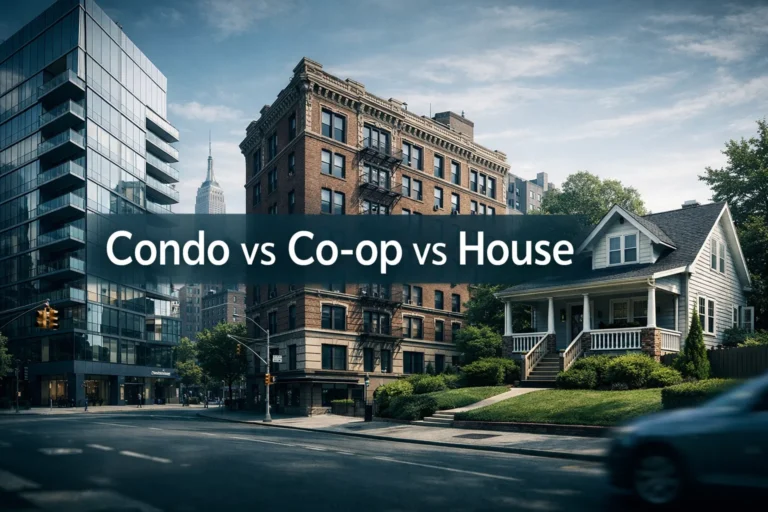
The two markets differ primarily in their approaches to property and in the “bundle of rights” system. New York City markets mostly use vertical living space, including Co-op Apartment living and Condominiums.
Whereas the Long Island real estate market operates with a high availability of fee-simple single-family detached properties.
Ownership Structures and Barriers to Entry
NYC requires prospective Co-op buyers to complete a comprehensive board interview process, which includes mandatory “post-closing liquidity” standards. The purchase of real property requires you to acquire shares in a business organization, a key factor to understand when exploring homes for sale in NYC.
Conversely, buying a home in Long Island vs NYC is a more traditional real estate transaction. The land and building belong to you, which enables you to make changes to the building and rent out space without restrictions.
Inventory and Scarcity

NYC’s inventory is perpetually constrained by geography and zoning. While Long Island experiences a housing shortage, the Long Island real estate market provides developers with chances to build new properties and rehabilitate existing structures on large land holdings. Many buyers find that the WL Group often highlights how limited inventory in prime Nassau County drives competitive bidding wars similar to those found in Manhattan.
- NYC Focus: Vertical density, shared amenities, proximity to transit.
- Long Island Focus: Horizontal sprawl, private outdoor space, and garage capacity.
Home Prices and Property Types in NYC vs Long Island
Understanding what your dollar buys in each location is the first step in narrowing your search, especially when evaluating the true cost to buy a home in NYC compared to suburban alternatives. The actual asset you receive from a purchase displays a completely different value from what the median prices indicate on paper.
The NYC Market: Condos, Co-ops, and Townhomes

In Manhattan and prime Brooklyn, the entry point for a one-bedroom condo often exceeds $1 million. The NYC vs Long Island real estate landscape includes more affordable Co-ops in Upper Manhattan, Queens, and the Bronx.
1. Condominiums
Offer the most flexibility but come with high monthly common charges.
2. Co-ops
Generally, 20-30% cheaper than condos but require higher down payments (often 20-25%).
3. Townhomes
The “holy grail” of NYC real estate, providing private entrances and multi-floor living, though prices often start at $2.5M+ in desirable areas.
The Long Island Market: Ranches, Colonials, and Capes
Long Island offers a classic Americana aesthetic. The Long Island real estate market provides different property types according to the “Line,” which divides the North Shore (Gold Coast) from the South Shore area.
Nassau County
High demand due to proximity to the city; smaller lots but premium school districts.
Suffolk County
More “bang for your buck,” larger acreages, and proximity to the Hamptons and North Fork vineyards.
NYC vs Long Island Home Comparison
Compare the typical home features in New York City and Long Island, including property type, outdoor space, parking, and maintenance responsibilities.
| Feature | New York City (Average) | Long Island (Average) |
|---|---|---|
| Typical Property | 1 to 2 Bedroom Co-op or Condo | 3 to 4 Bedroom Detached Home |
| Outdoor Space | Shared Roof Deck or Balcony | Private Yard or Patio |
| Parking | Street Parking or Paid Garage | Private Driveway or Attached Garage |
| Maintenance | Monthly HOA or Maintenance Fee | Landscaping and Exterior Repairs |
Brooklyn vs. Nassau County School Rankings: A 2026 Comparison
The year 2026 will see property values suffer because urban specialized schools fail to match the educational excellence that suburban districts provide.
Nassau County’s Academic Dominance
Nassau County maintains its status as a home to some of the highest-ranked school districts in the United States. The 2026 data shows that the Syosset, Jericho, and Great Neck school districts achieve A+ ratings.
Syosset, in particular, has been recognized as the #1 district in New York State and #2 in the entire country for its academic rigor and student-teacher ratios.
Brooklyn’s Specialized and District Variations
Brooklyn presents a more divided educational system. While schools like Brooklyn Technical High School and Brooklyn Latin rank among the best in the U.S., they require a competitive entrance exam (SHSAT).
For neighborhood schools, districts like District 15 (Park Slope) remain highly coveted yet suburban families prefer Nassau County, which provides them with more certainty regarding school quality.
Cost of Living Comparison Between NYC and Long Island
While home prices are the headline, the NYC vs Long Island cost of living is often dictated by recurring monthly expenses that buyers overlook during the honeymoon phase of house hunting.
Property Taxes vs. Income Taxes
One of the most significant differences when living in NYC vs Long Island is how the government collects revenue. Long Island residents do not have to pay the local income tax, which NYC residents must pay at a rate between 3.0 percent and 3.8 percent.
However, Long Island residents pay property taxes, which rank among the highest in the United States, with annual costs reaching between $10,000 and $30,000 depending on their school district.
Utility and Maintenance Variables
The monthly maintenance fee for an NYC apartment includes both heat and hot water services. On Long Island, you are the utility provider. You must budget for oil or gas heating, electricity for a 2,500-square-foot home, and water for lawn irrigation.
- NYC Hidden Costs: Assessment fees, high grocery markups, parking tickets.
- Long Island Hidden Costs: Snow removal equipment, pool maintenance, and car insurance premiums.
Lifestyle and Commute Factors Buyers Should Consider
The “better” location is ultimately subjective, depending on your tolerance for transit times and your need for “elbow room.”
The Commuter’s Dilemma
The Long Island Rail Road (LIRR) is the lifeline for the NYC suburbs’ housing market.
- A commute from Mineola or Great Neck might take 35 minutes to Penn Station or Grand Central, which is often faster than a subway ride from deep Brooklyn.
- However, once you reach your home station, you are almost entirely car-dependent.
Cultural Connectivity
New York City provides continuous access to its top dining establishments, theater performances, and nightlife activities. Whereas Long Island provides its residents with a relaxed lifestyle that revolves around its community parks, beach access points, and local village centers.
Social Dynamics
- NYC: High energy, anonymous, walkable, diverse social circles.
- Long Island: Community-centric, neighbor-focused, car-oriented, quieter evenings.
Which Location Is Better for First-Time Home Buyers?
The NYC vs Long Island real estate debate shows first-time buyers which home type to select between “Starter Home” and “Starter Apartment.”
Why NYC Might Win for First-Timers
The most accessible path to equity building for first-time buyers leads them to purchase an NYC Co-op.
- The lower price point of a one-bedroom apartment in Forest Hills or Riverdale enables residents to obtain a smaller mortgage.
- Additionally, the household saves more than $1,000 monthly because they do not require a vehicle, which eliminates expenses for gasoline, insurance, and vehicle financing.
Why Long Island Might Win for First-Timers
The NYC suburbs housing market provides better options to homebuyers who need both a dog-friendly yard and a home office space. First-time buyer programs (like SONYMA) are frequently utilized for Long Island purchases to help mitigate high closing costs.
Strategic Market Insights for 2026
The NYC vs Long Island real estate market demonstrates ongoing strength as we progress through current conditions, reflecting broader NYC real estate market trends and suburban demand shifts. The luxury condo market in NYC has witnessed a comeback, while Long Island maintains a seller’s market because of persistent inventory shortages.
Investment Potential
Real estate in NYC functions as a secure investment option that investors consider a “haven” asset class.
- The property values in Manhattan and Brooklyn preserve their value during economic downturns because they show a quick recovery.
- Long Island property values increase primarily based on two factors, which are local school rankings and the condition of the LIRR infrastructure.
The “Hybrid” Work Effect
The permanent market expansion of remote and hybrid work has created a lasting boost for the Long Island real estate market. Buyers who need office access two times per week choose to live in Suffolk County’s eastern areas, which offer them larger home spaces.
Final Thoughts
The decision between NYC vs Long Island real estate requires people to balance their financial needs with their personal lifestyle needs. If you thrive on the kinetic energy of a city that never sleeps and value a “lock-and-leave” lifestyle, the boroughs are your calling. Conversely, the Island attracts you if you want to control your property through land ownership while living in a neighborhood that focuses on domestic life. By using the real estate metrics from this guide, you can determine your ideal location to sign your upcoming contract with certainty.
Frequently Asked Questions (FAQs)
Q1. Is it cheaper to live in NYC or Long Island?
It depends on your lifestyle. While Long Island home prices can be lower per square foot, the high property taxes and the necessity of owning a car often make the NYC vs Long Island cost of living comparable. NYC residents save on transit but pay local income tax.
Q2. Are school districts better on Long Island or in NYC?
Generally, Long Island is world-renowned for its public school systems, particularly in Nassau County. NYC has excellent “Specialized High Schools,” but the quality of neighborhood schools can vary significantly from block to block.
Q3. What is the typical down payment required for NYC real estate?
For Co-ops, expect to put down at least 20%, with many boards requiring 25% or even 30%. Condos are more flexible, sometimes allowing as little as 10%, though 20% remains the standard for avoiding PMI.
Q4. How has the NYC suburbs housing market changed recently?
Inventory remains the biggest challenge. Many owners locked in low mortgage rates years ago and are hesitant to sell, leading to frequent bidding wars for well-maintained suburban homes.
Q5. Can I find a house in NYC with a yard?
Yes, primarily in the “outer-outer” boroughs like Staten Island, parts of Queens (Bayside, Whitestone), and the Bronx (Riverdale). However, these areas often function more like the Long Island real estate market in terms of car dependency.