Is It a Good Time to Buy a Home in NYC in 2026?

Deciding whether to buy a home in New York City in 2026 is a major financial decision. With changing mortgage rates, shifting inventory, and evolving buyer demand, many people are asking the same question: is it a good time to buy a home in NYC?
The answer depends on several factors, including interest rates, housing supply, and your personal financial situation.
For many buyers, 2026 presents a more stable window compared to previous years, offering better balance between pricing, inventory, and negotiation opportunities.
Is 2026 the Right Time to Buy a Home in NYC?
The short answer for most financially prepared individuals is yes, but the “why” is rooted in the current stability of the NYC real estate market in 2026. After years of fluctuating between extreme seller’s markets and high-interest stagnation, 2026 has emerged as a more stable year compared to recent market volatility.
The Normalization of Demand
In early 2026, the frenzy had cooled into a disciplined search process. According to the latest NYC home prices forecast, the median sales price across the five boroughs has leveled off to a modest 2% to 4% annual growth rate.
This is a strong indicator of a more balanced and stable market. It means that while you likely won’t see a “steal,” you are also less likely to experience a sudden drop in equity immediately after closing.
Inventory Shifts and Choice
For the first time in several years, the “lock-in effect” where homeowners refused to sell to keep their 3% mortgage rates is beginning to thaw. As life events like relocations and family expansions become unavoidable, more resale inventory is entering the market.
This increased choice is a primary reason why many analysts suggest that now is the best time to buy a house in NYC for those seeking specific architectural styles or neighborhood blocks.
- Many real estate experts suggest that trying to perfectly time the market is less effective than focusing on long-term ownership. In a city like New York, long-term holding has historically delivered consistent value.
Long-Term Value Retention
Historically, New York City property has remained a stable long-term investment. Even during national downturns, the density and global appeal of NYC often buffer it against the most severe drops. Buying in 2026 allows you to capture this stability before the next potential cycle of rapid appreciation begins.
Current NYC Housing Market Conditions for Buyers

The 2026 landscape requires borough-specific data analysis. New York City operates as multiple distinct markets that maintain their own market status.
Manhattan: The Luxury Resilience
The “pied-à-terre” and luxury markets of Manhattan have experienced a new growth phase.
- The Financial District and Midtown areas will receive their first new residential inventory through office-to-residential conversion projects that will start in 2026.
- While prices remain high, the “Days on Market” (DOM) has increased to roughly 100 days, giving buyers more room for negotiation.
Brooklyn and Queens: The Efficiency Hubs
Brooklyn continues to lead in price-per-square-foot growth, particularly in areas like Bushwick and Bedford-Stuyvesant. Meanwhile, Queens is seeing a surge in multi-family interest, creating strong opportunities for those looking to sell your home in Queens NY as buyer demand continues to rise.
If you are wondering whether to buy a home in NYC in 2026, your decision may depend on your need for space versus proximity. Queens currently offers the most “value-per-dollar” for those willing to commute an extra 15 minutes.
Key Data on Buying a Home in NYC in 2026
| Metric | 2024 Average | 2026 Forecast | Trend |
|---|---|---|---|
| Median Listing Price | $1.1M | $1.2M | Stable Growth |
| Inventory Levels | Record Lows | Increasing (6–8% YoY) | Improving |
| Mortgage Rates | 7.2% | 5.8%–6.3% | Moderating |
| Days on Market | 75 Days | 95–105 Days | Buyer-Friendly |
| Price Reductions | Rare | 12% of Listings | More Negotiation Room |
Mortgage Rates and Their Impact on NYC Home Buyers
Financing plays a major role in any real estate decision. In 2026, the Federal Reserve’s pivot toward a neutral stance has provided much-needed relief to those buying property in New York 2026.
The 6% Psychological Threshold
For much of the past two years, rates hovering near 7% acted as a barrier. In 2026, rates have settled in the high 5% to low 6% range. While this is not the “free money” of 2021, it is a sustainable rate that allows for a healthier debt-to-income ratio.
A 1% drop in rates can increase a buyer’s purchasing power by nearly 10%, making luxury condos suddenly accessible to mid-market buyers.
Refinancing as a Secondary Strategy
Many 2026 buyers are entering the market with the “Marry the house, date the rate” mentality. Because buying property in New York 2026 often involves high principal amounts, even a small future drop in rates can lead to significant monthly savings via refinancing.
However, a smart buyer should never purchase a home they cannot afford at today’s rate.
Pros and Cons of Buying Property in NYC Right Now
Evaluating a NYC purchase requires an objective “Pros and Cons” list to ensure the decision is rooted in logic rather than emotion.
Pros of Buying a Home in NYC in 2026
Predictable Appreciation
NYC real estate has historically outpaced inflation.
Rental Hedge
With NYC rents hitting all-time highs in 2026, a fixed mortgage is a reliable hedge against the ever-increasing cost of living.
Tax Benefits
Mortgage interest and property tax deductions remain powerful tools for high-earning New Yorkers.
Cons of Buying a Home in NYC in 2026
High Closing Costs
Between the Mansion Tax and Mortgage Recording Tax, NYC buyers face some of the highest entry costs in the USA.
Co-op Board Rigidity
In 2026, Co-op boards remain as strict as ever, requiring significant liquidity (often 24 months of “post-closing carries”).
Maintenance Increases
Inflation has hit building staff wages and fuel costs, leading to higher monthly HOAs and maintenance fees.
Tips for Buyers Entering the NYC Market in 2026
If you are planning to buy a home in NYC in 2026, having a clear strategy is essential.
Get Pre-Approved for the 2026 Climate
Lenders have tightened their approval standards. A “pre-qualification” is no longer enough. You need a full underwritten pre-approval to be taken seriously by listing brokers. This proves you can handle the 6% rate environment and the specific building requirements of NYC.
Look for “Value” Neighborhoods
Don’t just hunt in the “Top 5” neighborhoods.
Inwood & Washington Heights
Offer Manhattan living at a 40% discount compared to the Upper West Side.
Astoria & Sunnyside
Providing incredible transit links with more inventory than Long Island City.
Staten Island
For those seeking single-family detached homes, Staten Island remains the most affordable borough in the NYC real estate market 2026.
Leverage the “WL Group” Professionalism
When navigating complex deals like HDFC Co-ops or New Development sponsor units, having a team that understands the legal nuances is vital. WL Group emphasizes that a buyer’s agent should act as your “Chief Operating Officer,” coordinating the attorney, the inspector, and the mortgage broker to ensure a smooth path to closing.
NYC Housing Market Outlook for 2026
The year 2026 represents a “window of opportunity” for those who were sidelined during the high-interest peak of 2024 and 2025.
- While we are not seeing a “fire sale,” we are seeing a return to a balanced market where buyers have time to breathe, inspect, and negotiate.
- The NYC home prices forecast suggests that those who wait for a 4% interest rate may find themselves in a much more crowded and expensive market by 2027.
By acting now, you capture the benefits of higher inventory while still enjoying rates that have come down significantly from their 8% peaks. Success in the New York market has always been about “time in the market,” and 2026 provides a stable entry point for those looking to build generational wealth in the world’s premier city.
Final Thoughts: Is It a Good Time to Buy a Home in NYC?
Whether 2026 is the right time to buy a home in NYC depends on your financial readiness and long-term goals. With stabilizing mortgage rates, improving inventory, and steady property values, buyers now have more time to make informed decisions in a less competitive environment.
Frequently Asked Questions (FAQs)
Q1. Is it a good time to buy a home in NYC for an investment?
Yes, specifically in the multi-family sector. With the 2026 rental market showing 5% annual growth, “house-hacking” (living in one unit and renting others) remains one of the best ways to offset high New York living costs.
Q2. Will NYC home prices drop later in 2026?
The current NYC home prices forecast does not predict a crash. Instead, experts see a “plateau.” While individual sellers may drop prices if they are in a hurry, the overall lack of new supply prevents a significant borough-wide decline.
Q3. What is the “Mansion Tax” in 2026?
In NYC, any residential purchase of $1 million or more is subject to a 1% (or higher, on a sliding scale) tax paid by the buyer. In 2026, as more “average” apartments cross the $1M threshold, this tax has become a standard closing cost for many first-time buyers.
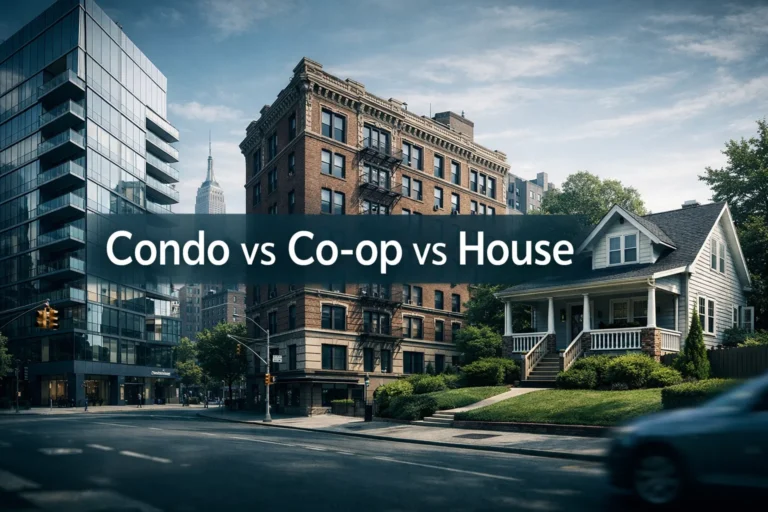
Q4. Should I buy a condo or a Co-op in the current market?
Condos offer more flexibility and higher resale potential but are roughly 20-30% more expensive than Co-ops. Co-ops are more affordable but have stricter rules. In 2026, Co-ops are seeing more price reductions, making them a practical choice for long-term residents.
Q5. How long does the average NYC home purchase take in 2026?
From offer to closing, expect 60 to 90 days for a Condo and 90 to 120 days for a Co-op. The “Board Interview” process remains the primary bottleneck in the New York timeline.
Q6. Are there specific closing costs unique to new developments in 2026?
Yes. When buying a “sponsor unit” in a new development, the buyer is often expected to pay the developer’s transfer taxes (roughly 1.825%) and their attorney fees. It is advisable to negotiate these credits during the initial offer stage to reduce your out-of-pocket cash requirements.